
UX research + product design · Interviews, UI, prototype · 2026
Labeling AI in creator content
A Reels disclosure system that explains how AI was used, not just that it was.
When you scroll, how do you know what’s real?
- Role
- Research, design, prototyping
- Timeline
- Jan–May 2026
- Team
- Solo
- Tools
- Figma, Figma Make, HTML/CSS/JS
in short
AI now helps write, edit and caption influencer content, but viewers can’t tell how much. I interviewed a viewer, a student creator and a professional who runs an AI video studio, and mapped what I heard into six themes. The key tension: disclosure can make a post feel more honest but less human. So I designed a Reels prototype that explains AI use in plain language and credits the creator for the rest, then gathered feedback on it in two rounds.
Transparency alone doesn’t fix trust
AI can now write scripts, edit video and even simulate a person on Instagram Reels. That makes content faster and cheaper to produce, but influencer marketing runs on authenticity, relatability and parasocial trust. When AI gets less detectable, people start to distrust everything.
The obvious fix is a label. My research suggested that isn’t enough: a disclosure can make a post feel more honest while also making it feel less persuasive and less emotionally connected. The real gap is that there’s no clear, human way to explain how AI was involved.
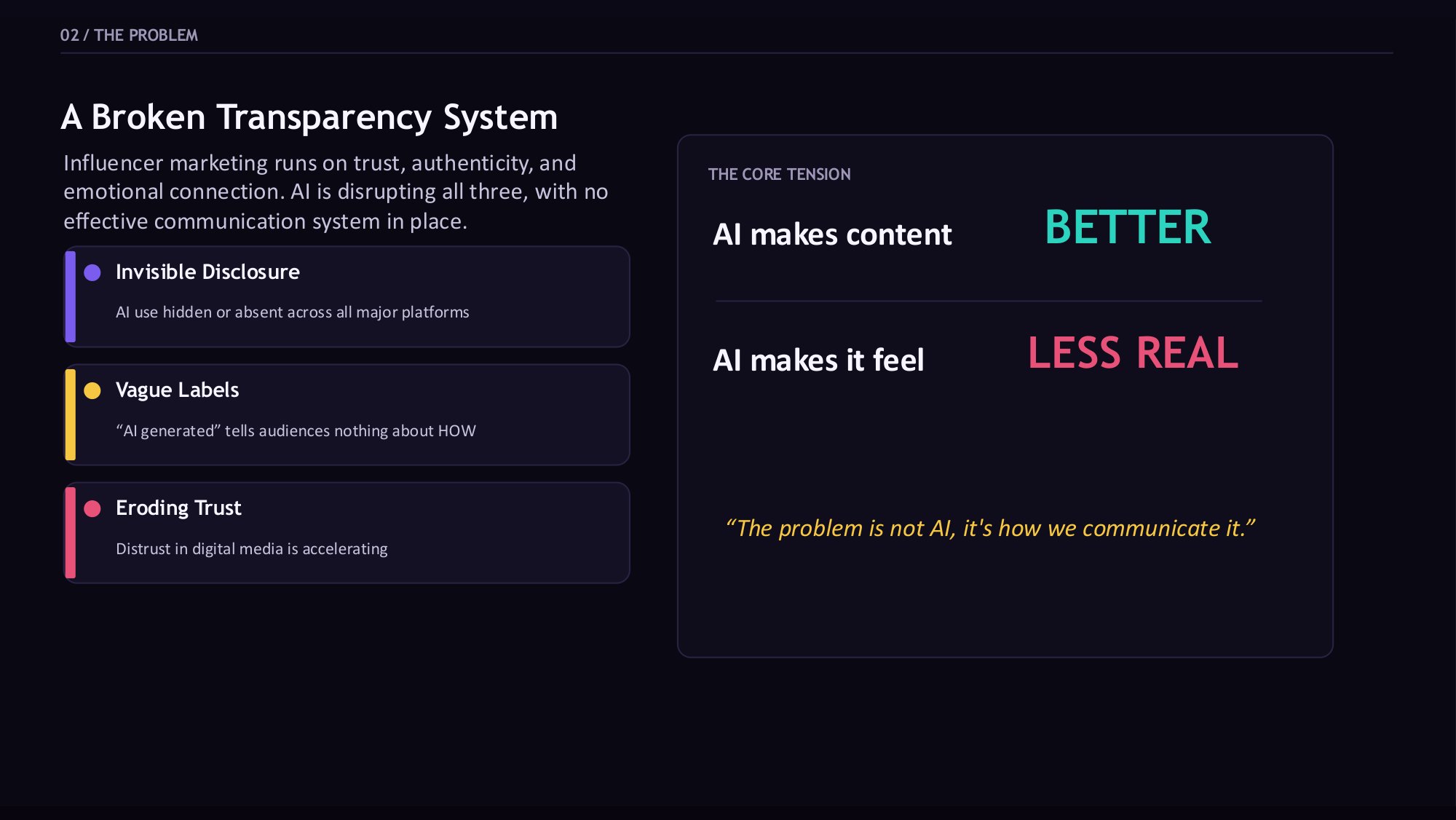
“The problem is not AI, it’s how we communicate it.”
I scoped the work to Instagram Reels, AI-assisted creators rather than fully synthetic ones, and how Gen Z viewers perceive disclosure.
Three interviews, six themes
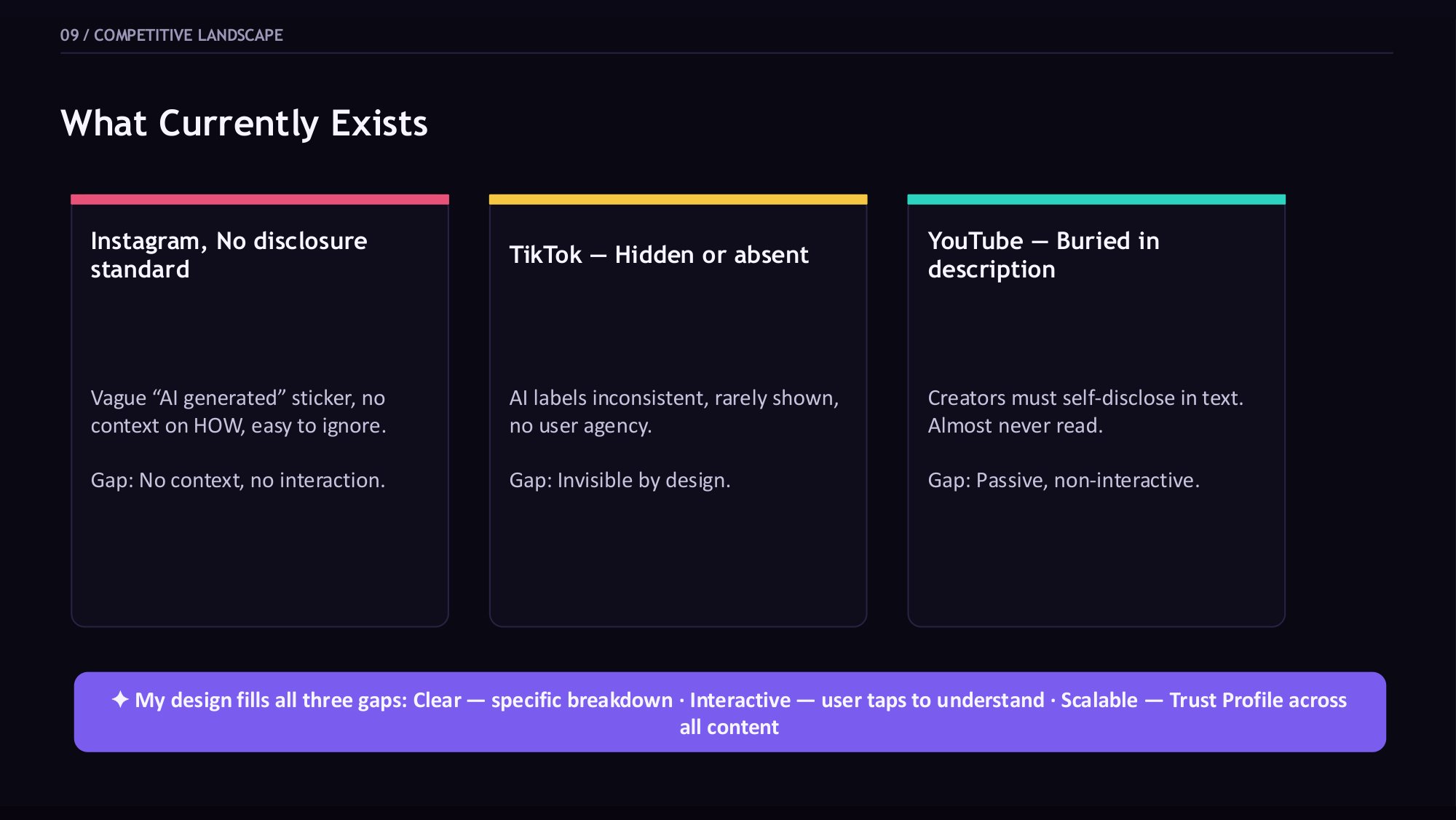
I started with a literature review and a look at what platforms already do. Instagram, TikTok and YouTube each had a gap: a vague label with no context, labels that rarely show up, or a disclosure buried in a description almost nobody reads.
Then I interviewed three people, each from a different side of the problem: an everyday Reels viewer, a student who creates social content, and a professional who runs a small AI video studio. I wrote a separate question set for each of them, covering things like their habits, how they spot AI, disclosure, and when AI starts to feel deceptive.
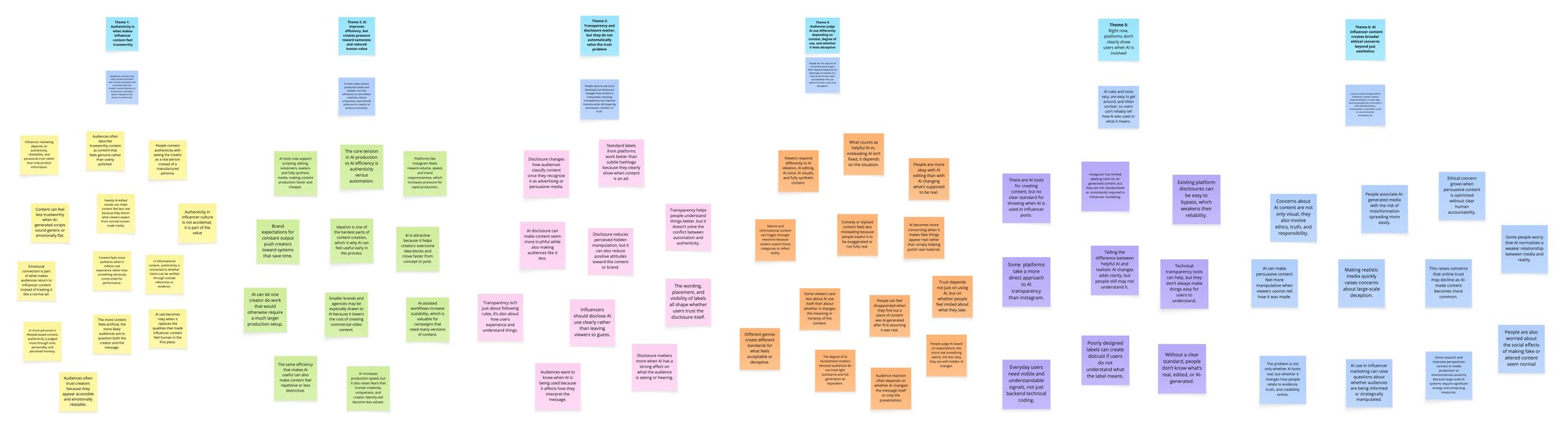
Grouping the interviews and literature on affinity boards produced six themes:
- Authenticity is what makes influencer content feel trustworthy.
- AI improves efficiency, but creates pressure toward sameness and reduced human value.
- Transparency and disclosure matter, but they do not automatically solve the trust problem.
- Audiences judge AI use differently depending on context, degree of use, and whether it feels deceptive.
- Right now, platforms don’t clearly show users when AI is involved.
- AI influencer content creates broader ethical concerns beyond just aesthetics.
What the research told me
- Efficiency strips the human touch. AI-made content can look polished and engaging but feel less trustworthy, because the effort and personality people judge authenticity by are missing.
- The transparency paradox. Disclosure makes content more honest while drawing attention to what’s missing. Too much transparency can break the connection it’s meant to protect.
- Ambiguity is the real problem. The discomfort isn’t only about whether something looks real. It’s not knowing, and vague platform labels make that worse.
Not all AI is judged equally either. People were more comfortable with AI editing than with AI changing what’s supposed to be real.
From 61 ideas to four features
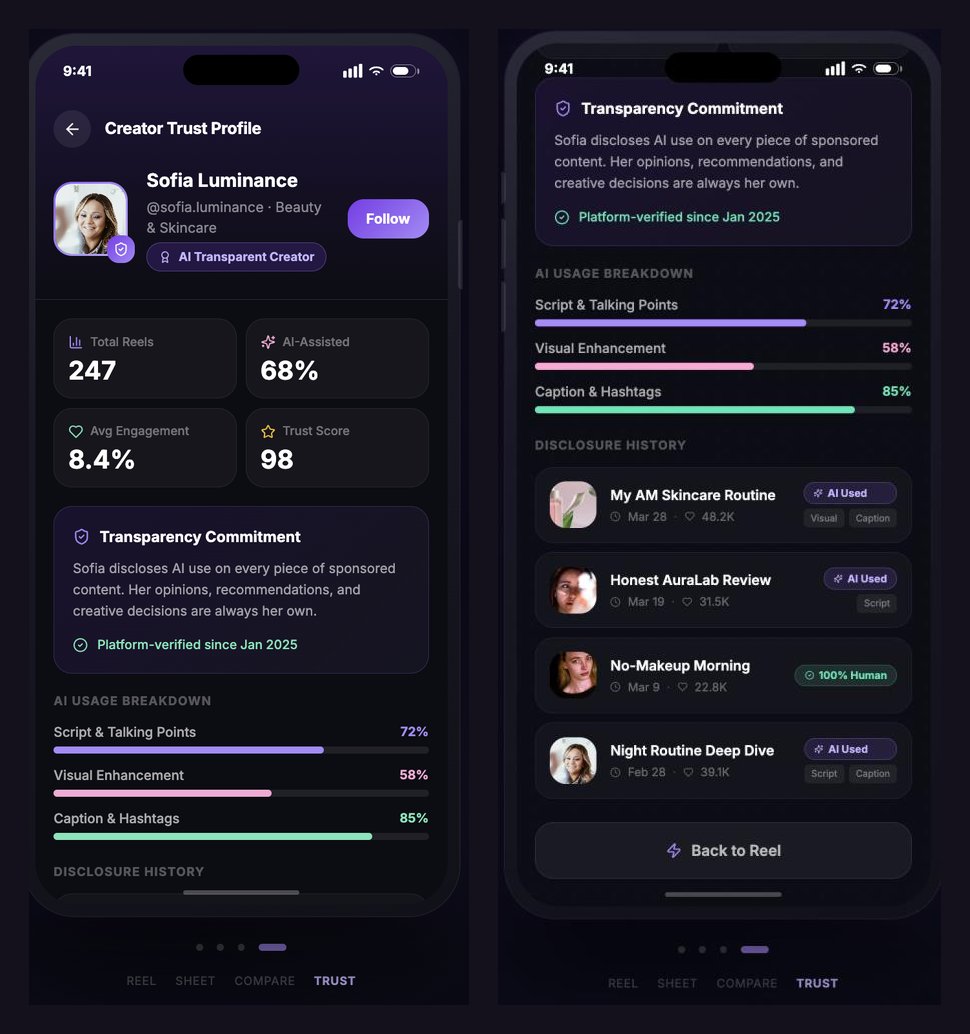
I turned the themes into six How Might We questions, like “How might we make AI disclosure clear and honest without making audiences immediately lose trust?” Then I brainstormed 61 ideas. The ones I built on became four features: a tappable ✦ label, a plain-language disclosure sheet, a toggle between the AI-assisted and non-AI versions, and a creator trust profile with a history of past disclosures.
I designed around a synthesized primary persona, Maya, a 21-year-old who scrolls fast, rarely reads captions and judges authenticity by vibe. That set the interaction model: scroll → notice → tap → understand. Anything that needed reading had to wait until she chose to tap. A secondary persona, Sofia, is a freelance creator who fears that using AI may make her content feel less authentic.
Three versions to get the tone right
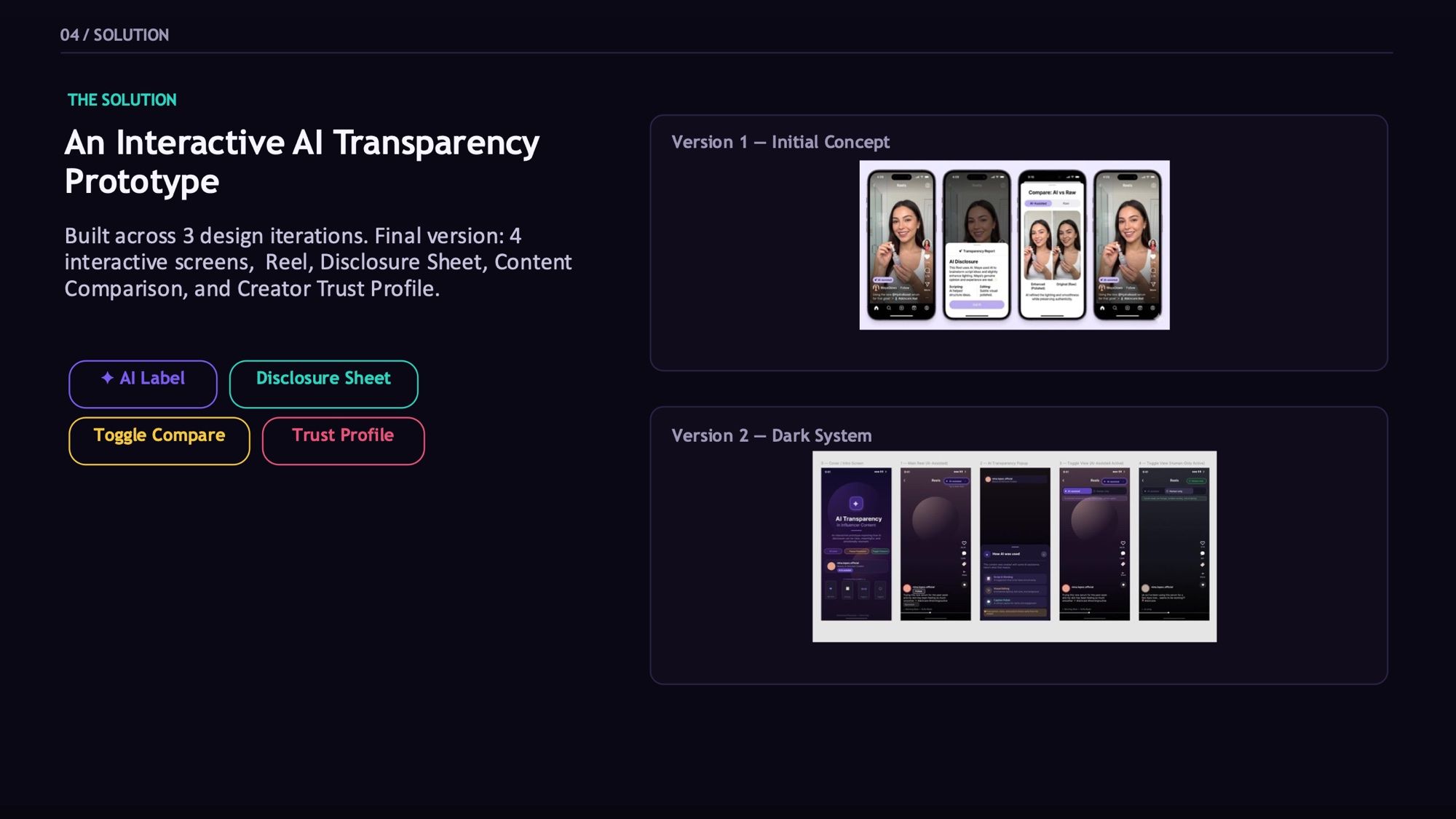
Decisions that came straight from the research
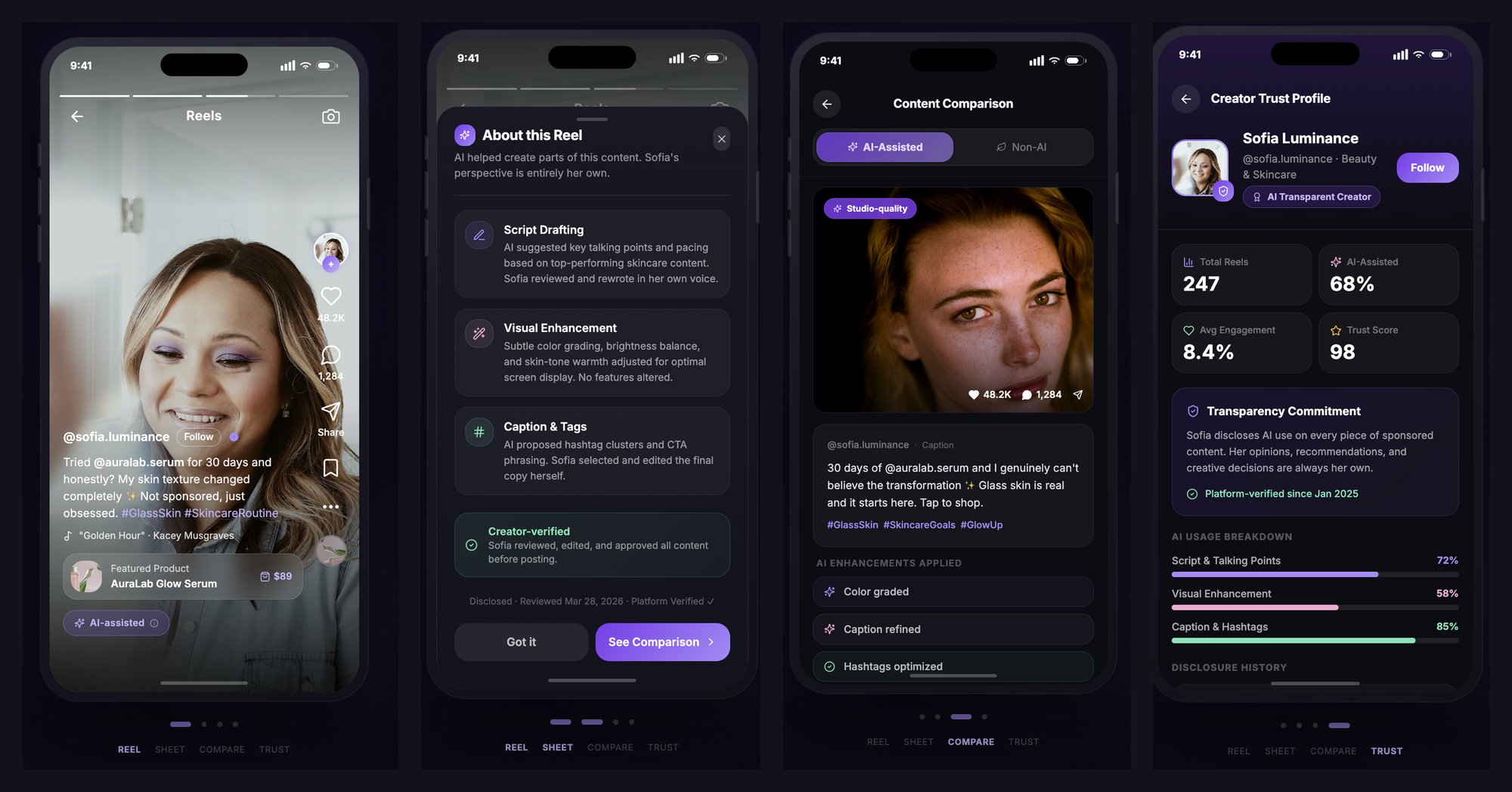
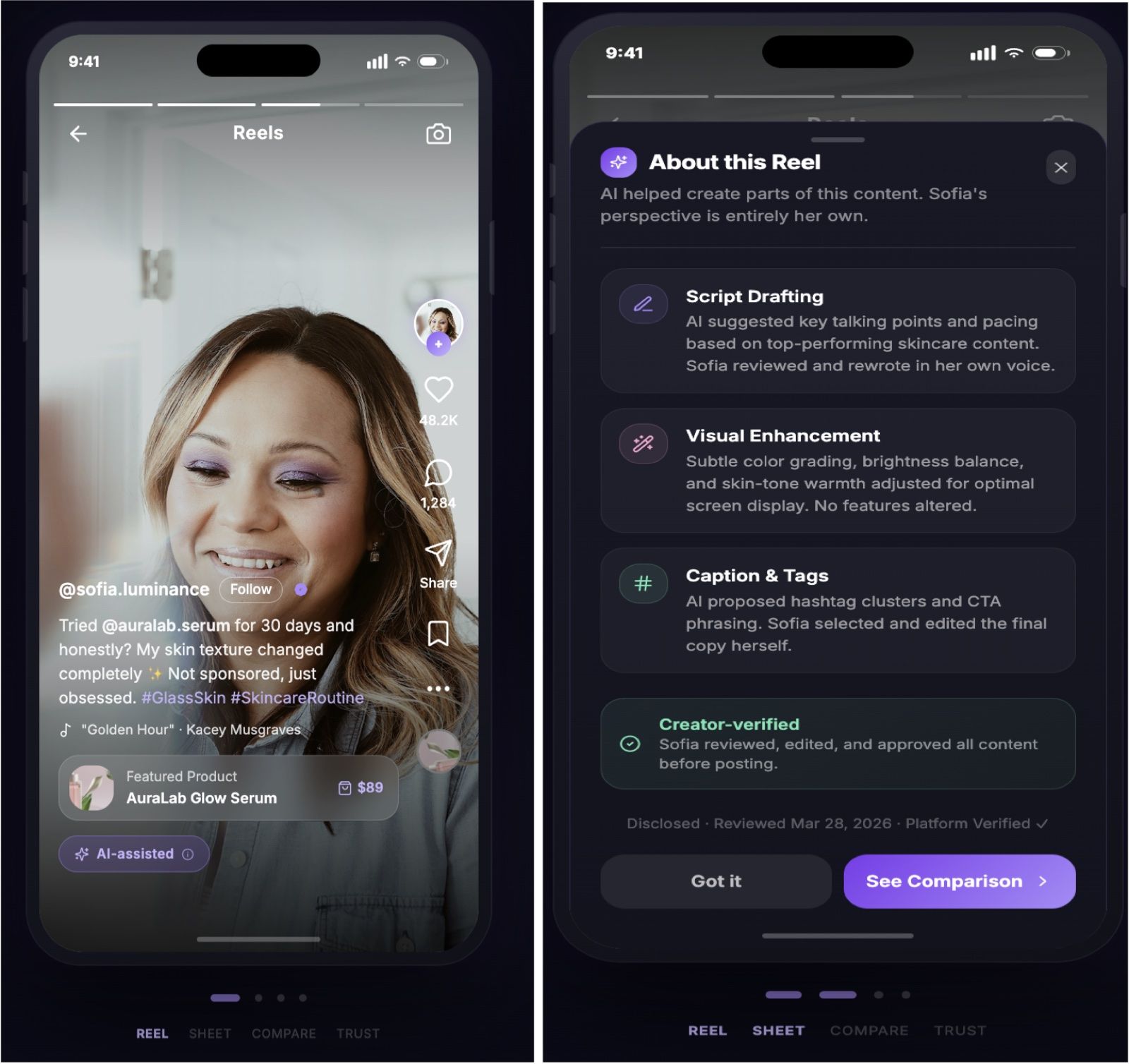
- A label, not a warning. A small “✦ AI-assisted” pill sits under the caption. It’s visible but not alarming, and tapping it is the entry point.
- Explain how, in plain language. The disclosure sheet splits AI use into Script Drafting, Visual Enhancement and Caption & Tags, each saying what AI did and what stayed hers.
- Credit the human. The sheet opens with “AI helped create parts of this content. Sofia’s perspective is entirely her own,” followed by a creator-verified note.
- Drop “AI generated.” The phrase implies AI made the whole thing, so I removed it and rewrote the copy to sound less technical and more like human language.
The final prototype
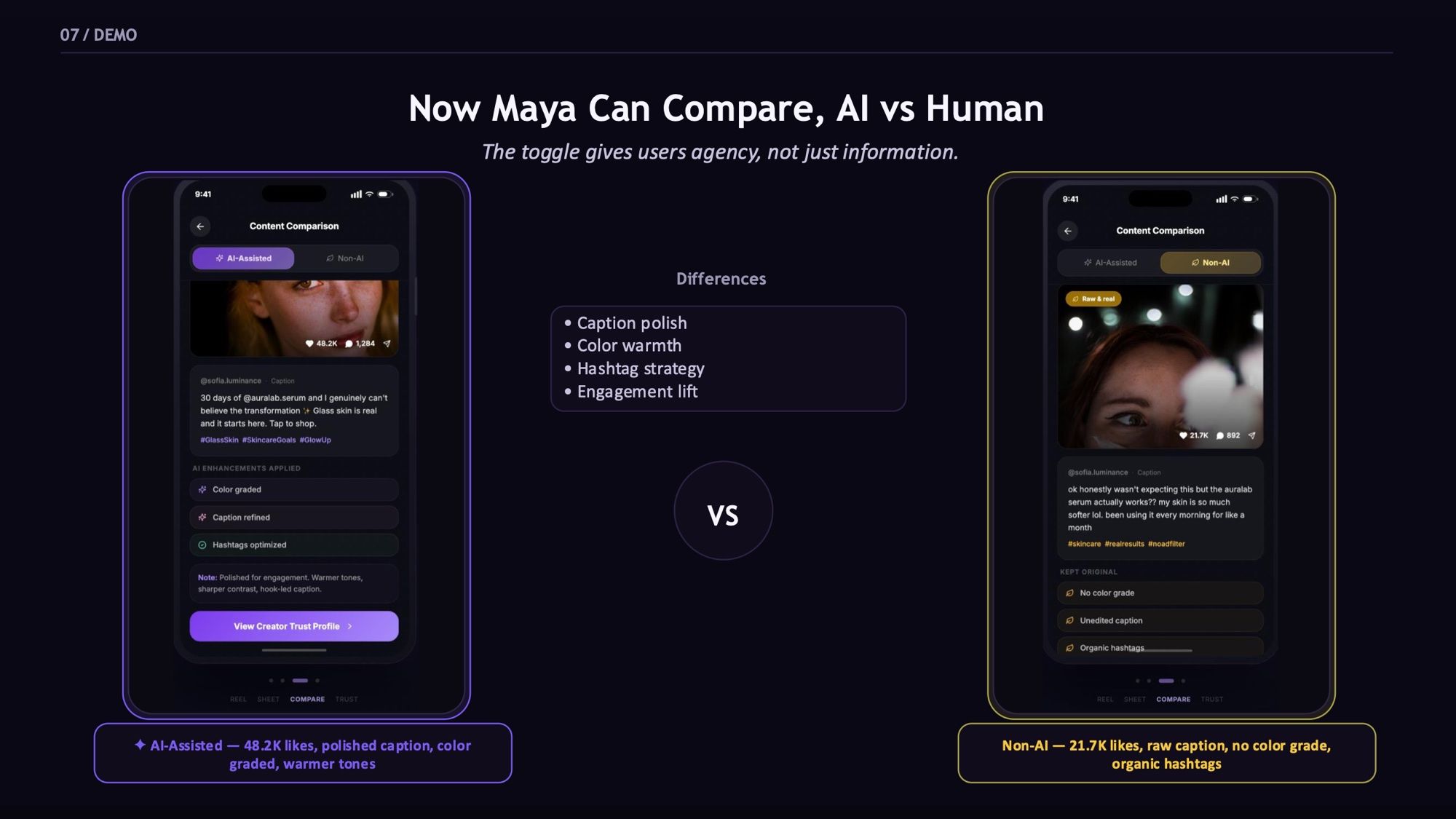
Four connected screens: the Reel, the disclosure sheet, an AI-assisted vs. non-AI comparison, and a creator trust profile. I designed the high-fidelity screens in Figma and made them interactive, so tapping the label opens the sheet and the toggle switches between versions. My plan for the live demo paired a Figma Make prototype with HTML, CSS and JavaScript for the core interactions.
“The toggle gives users agency, not just information.”
Two rounds of feedback
Round one was with a daily Reels user who matched the primary persona. The label didn’t read as a warning, and the categories made more sense than “AI generated” would have. Her worry was that a label sitting low on the screen, next to the other engagement labels, could get overlooked. So I planned to move the creator-verified message higher in the sheet and give the label more space.
Round two was at a public showcase, with frequent Instagram and TikTok users and an expert reviewer. One person said he’d trust a post less once he knew AI was involved, but wouldn’t care much if AI only wrote the caption. That backed up the context theme: AI that edits an image may affect trust more than AI that only helps with the wording. Next on my list: saving each creator’s AI-use history automatically, and presenting it more like a real product.
What I’d keep from this
There wasn’t much research on this yet, so I leaned on interviews and design experiments, and learned to treat limited information as a reason to explore instead of a reason to stop. I chose an interactive prototype over building a whole site because, even though the work is about technology, it’s really about trust and communication.
This was a prototype of one scenario, not a shipped feature, and I didn’t measure a change in trust.